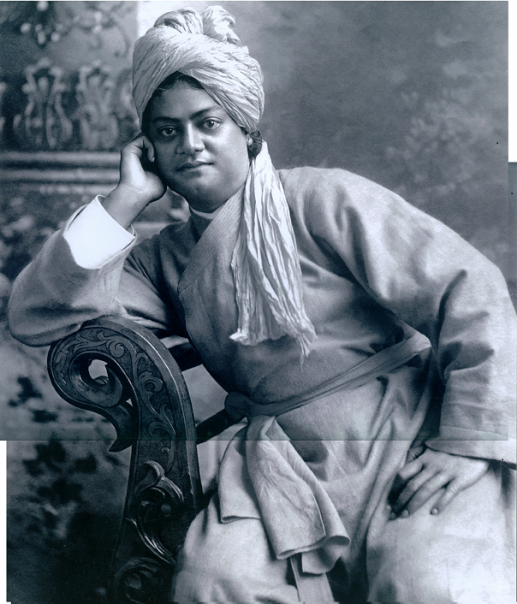
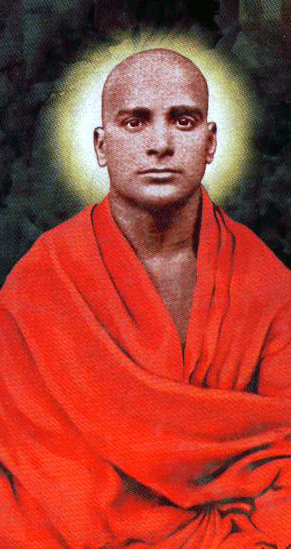
Swami Rama Teertha's Early Life and Path to Sannyas
Swami Rama Teertha was born on 22 October 1873 (Deepawali Vikram Samvat 1930) in Muraliwala, Gujranwala District, now in Pakistani Punjab. Losing his mother as an infant, he was raised by his elder brother, Gossain Gurudas. Excelling in academics, he earned a master's degree in mathematics from Government College, Lahore, and became a professor at Forman Christian College. However, his life took a transformative turn in 1897 after meeting Swami Vivekananda in Lahore, which inspired him to renounce worldly life. Known for his insightful speeches on Krishna and Advaita Vedanta, he embraced sannyas in 1899 on Deepawali. Leaving behind his family and career, he fully dedicated himself to spiritual and philosophical pursuits. Swami Rama’s teachings embodied Vedanta as a realization of the true Self—Sat-Chid-Ananda, the state of infinite existence, knowledge, and bliss.
Contributions to Vedanta and Social Reform
Swami Rama Teertha was not just a Vedantic teacher but also a fearless social reformer and visionary. He believed Vedanta was not dogma but the realization of one's divine nature. During his lectures in India and abroad, including Japan and the United States, he emphasized practical Vedanta—a philosophy blending spiritual realization with societal responsibilities. Swami Rama condemned the caste system, advocated for the education of women and the poor, and promoted self-reliance among Indians. He famously remarked that neglecting the education of marginalized groups was akin to severing the roots of a nation. Swami Rama also worked to support Indian students abroad, establishing scholarships and mentorship programs. His speeches, rich in wisdom and social relevance, inspired many to reform themselves and their communities, leaving a lasting impact on India’s intellectual and spiritual landscape.


Legacy and Prophecy for India’s Future
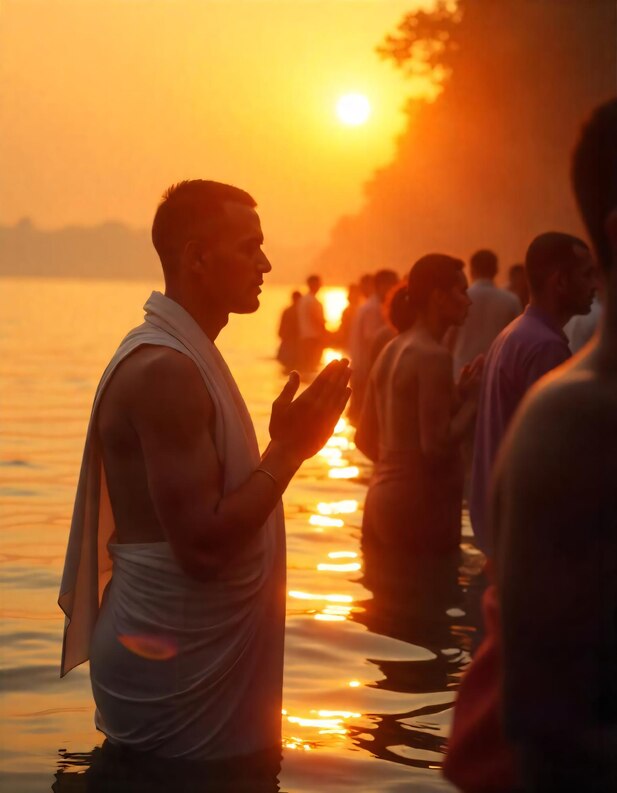
Swami Rama Teertha spent two years in the United States from 1902, spreading Hinduism and practical Vedanta to global audiences. Despite gaining widespread attention, he withdrew from public life in 1906, retreating to the Himalayas to focus on his writings. Although his book on practical Vedanta remained incomplete, his legacy endured through his lectures and the monumental work In Woods of God-Realization. Swami Rama passed away on 27 October 1906, coincidentally Deepawali, leaving behind a legacy as profound as his teachings. Many believe he merged his body with the sacred Ganges, symbolizing liberation. He predicted the rise of nations, foretelling Japan's prosperity, China’s ascent, and a future resurgence of India as a hub of prosperity and learning. His timeless teachings continue to inspire seekers worldwide, reflecting his vision of a noble and enlightened world.